
Why Confidence Often Grows on the Other Side of Difficulty
One of the things we do regularly with kids at the ranch is guide them through a simple obstacle course with the horses.
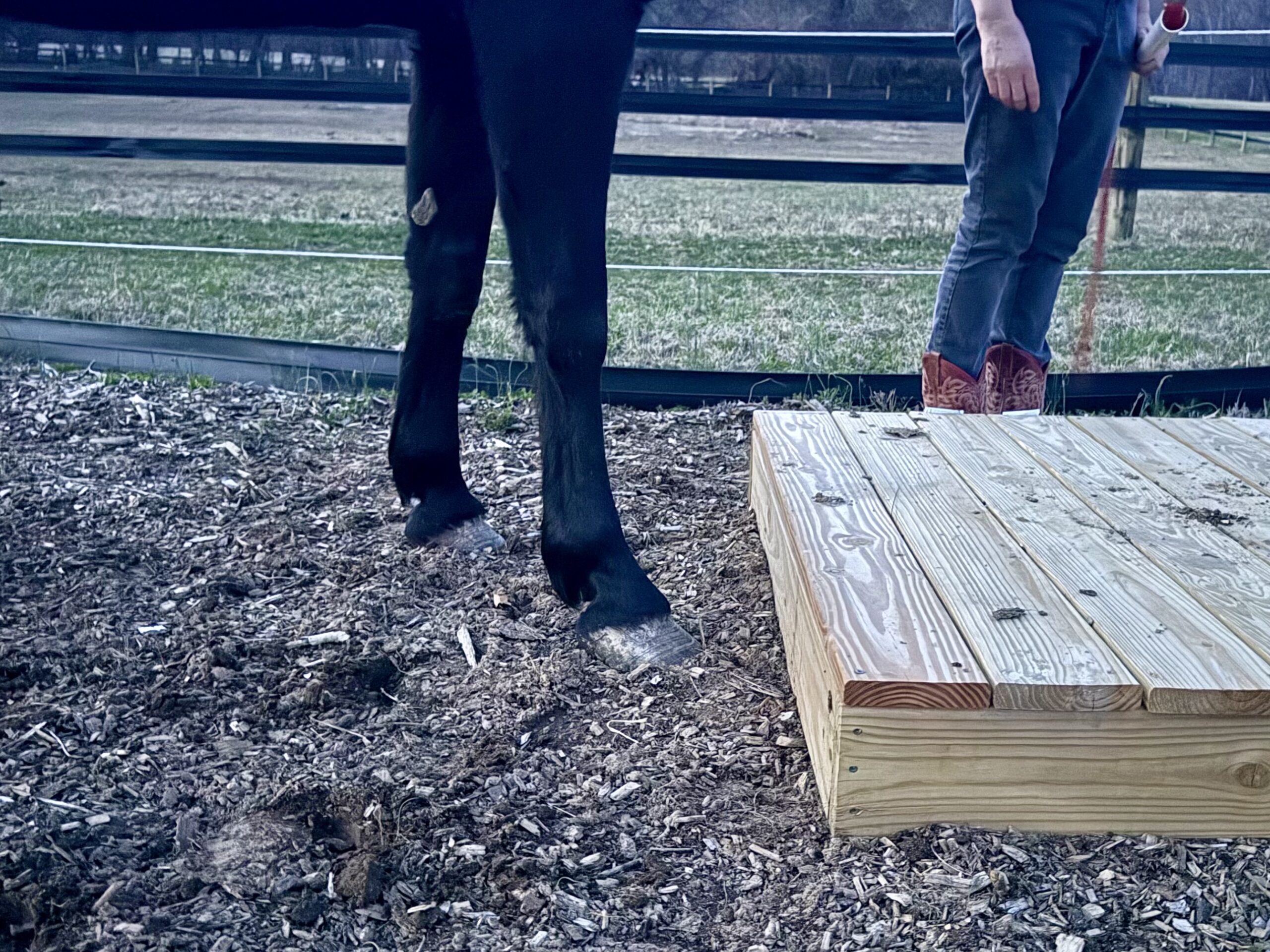
In the arena we keep several wooden boxes—low platforms that horses can step onto or walk across. They’re simple training tools, but they create an opportunity for kids to practice one of the most important horsemanship skills they’ll learn: leading.
Our horses know these obstacles well. They walk over things like that all the time. But for many of the kids who come to the ranch, learning how to lead a horse across something unfamiliar is a new experience.
And that’s where the learning begins.
I remember watching a boy one afternoon as he approached one of those wooden boxes with his horse. He had the lead rope in his hand and a determined look on his face. From his perspective, the task seemed simple enough—walk up to the box and lead the horse over it.
But when they reached the edge of the obstacle, the horse stopped.
Not dramatically. Just a quiet pause.
The horse lifted his head slightly. His ears moved forward. His attention locked onto the wooden platform in front of him.
Horses are careful animals. When they encounter something unfamiliar, they don’t rush forward. They observe first.
The boy tugged gently on the rope, expecting the horse to follow.
The horse didn’t move.
Instead, he lowered his head and stretched his nose toward the box, sniffing it carefully. He stepped closer, then shifted sideways, circling around the edge of it as if to say, I’m not quite convinced about this.
Avoidance.
The boy looked back toward us with a mixture of confusion and frustration. From where he stood, the obstacle seemed small. It was obvious the horse could step over it.
Why wouldn’t he?
The Moment Where Learning Begins
This moment happens almost every time a child leads a horse over an obstacle for the first time. The horse hesitates, then investigates, and first tries to avoid it.
And the child has to decide what to do next.
It would be easy for an adult to step in at that moment. We could walk over, take the rope, guide the horse forward, and have the problem solved in seconds.
But if we did that, something important would be lost.
So instead, we simply stood nearby.
“Take your time,” we told him.
“Try again.”
The boy turned back toward the horse and walked toward the box once more. This time he slowed down. His movements were a little steadier. He gave the horse room to think.
The horse sniffed the box again. He shifted his weight.
Then, almost cautiously, he lifted one hoof and placed it on top of the platform.
A second later the other hoof followed.
And just like that, the obstacle that had felt so uncertain moments before was no longer a problem.
The horse walked across.
The boy’s face lit up.
Why the Struggle Matters
What made that moment so meaningful was not the obstacle itself.
The horse already knew how to step over it. He had done it countless times before.
The real learning was happening in the boy.
He was discovering how to lead, but more importantly, he was learning the importance of patience and clarity.
He was learning how to stay steady when things didn’t go as planned.
If we had stepped in and solved the problem for him, the obstacle would have disappeared—but so would the growth.
Struggle, in the right environment, is not something to avoid.
It’s something that shapes confidence.
The Parent Instinct to Rescue
Parents feel the tension of this moment all the time.
When a child struggles—with schoolwork, friendships, responsibilities, or disappointment—the instinct is to step in quickly and fix the situation. It’s our natural instinct as parents, to smooth things over, solve problems, and remove the obstacles.
The impulse comes from love. No parent enjoys watching their child feel frustrated or uncertain.
But confidence rarely grows in moments where everything is easy.
Confidence grows when a child faces something difficult and discovers they can move through it.
The boy leading that horse didn’t gain confidence because the obstacle was simple.
He gained confidence because he stayed with the challenge long enough to overcome it.
What Resilience Really Looks Like
At the ranch we see this pattern often.
A horse hesitates at something new. A child hesitates too. Both are learning to process something unfamiliar.
With steady leadership, the moment slowly shifts.
The horse relaxes.
The child steadies.
Another attempt is made.
And eventually the obstacle becomes just another step along the path.
Resilience isn’t about never feeling hesitation.
It’s about learning to move forward even when hesitation is present.
The Power of Steady Leadership
One of the most important roles mentors play in those moments is simply staying present; not to remove the obstacle or rush the solution. We don’t step in and take control of the rope.
Instead, we remain calm and offer encouragement.
“Take a breath.”
“You’re doing fine.”
“Try again.”
Children build resilience when someone steady stands beside them while they struggle.
They don’t need someone to eliminate every difficulty. They need someone who believes they can face it.
Where Faith Deepens the Story
Scripture shows us a similar pattern.
God does not remove every obstacle from our lives. Instead, He walks with us through them.
James writes that trials produce perseverance. Paul reminds us that perseverance develops character. Over and over, the Bible points to the same truth: growth often happens in the middle of difficulty.
Faith doesn’t promise a life without struggle.
It reminds us that we are not alone in it.
When children see that kind of steadiness—both from the adults around them and from the God we trust—they begin to learn that obstacles are not the end of the story.
They are often where growth begins.
Helping Kids Discover Their Strength
When the boy finally led his horse across that wooden box, the victory was about more than stepping over an obstacle.
He had faced hesitation and worked through frustration.
He had stayed steady long enough to succeed.
Moments like that shape a child’s confidence in ways that easy success never could.
If we want to raise resilient kids, we cannot remove every obstacle from their path.
Instead, we walk beside them as they face those obstacles themselves—offering encouragement, steady leadership, and faith in their ability to grow.
Because very often, the strength our children need is discovered on the other side of struggle.
Continue the Conversation
If this reflection resonates with you, you may also want to read:
- Raising Strong Kids Without Hardening Their Hearts
- The Steadiness Our Kids Need Starts With Us
- Building Trust With Your Child
Each reflection explores how connection, steady leadership, and faith help shape resilient hearts.