One of the first things we notice when something isn’t right is behavior.
A child snaps back.
Another shuts down.
Someone melts down over something small.
Someone else refuses to cooperate at all.
Behavior gets our attention because it’s visible, disruptive, and often urgent. It interrupts dinner. It derails school mornings. It turns simple moments into exhausting ones.
And this isn’t limited to parenting.
We see the same patterns with coworkers who become defensive, neighbors who grow distant, spouses who withdraw, and even parents or grandparents who react more sharply than we expect. In all kinds of relationships, behavior is often what brings us to the moment.
But more often than we realize, behavior isn’t the whole story.
The Trap of Fixing Behavior First
Most of us were raised to believe that if we could just correct behavior, everything else would fall into place. So we focus on what we can see and control.
We correct.
We warn.
We push harder.
We look for leverage.
Sometimes that works—at least on the surface. The behavior stops. The room quiets down. The moment passes.
But quiet doesn’t always mean connection has been restored. And without connection, growth rarely lasts.
When we focus only on behavior, we often miss what the behavior is actually trying to protect or restore. And that’s true whether we’re dealing with a child, a coworker, a family member, or ourselves.
Behavior matters. Boundaries matter. Correction matters. But behavior is rarely the best starting point when what’s really at stake is relationship.
Behavior as a Search for Connection
Over time—especially through our work at the ranch—we’ve learned to look at behavior differently.
Often, behavior is communication before it’s defiance.
And beneath that communication is usually a desire for connection.
Kids don’t always have the words to say:
- I don’t feel safe here.
- I don’t know how to stay connected in this moment.
- I’m overwhelmed and don’t know how to ask for help.
- I’m afraid of losing this relationship.
So behavior becomes the language.
That’s true for adults too. Sarcasm, withdrawal, anger, control—these are often signs that connection feels threatened or broken. Behavior becomes a way of coping when connection feels out of reach.
Seeing behavior this way doesn’t excuse harm or disrespect. But it does change how we respond. It shifts us from reacting to restoring—restoring connection so growth can happen.
Why Correction Without Connection Falls Short
Consequences can stop behavior in the moment. Authority can end an argument. Structure can impose order.
But without connection, those tools rarely produce lasting change.
People may comply outwardly while pulling away inwardly.
They may disengage, escalate, or harden themselves emotionally.
They may learn how to avoid consequences without learning how to grow.
Pressure can manage behavior, but it can’t restore connection.
And without connection, hearts don’t heal.
When a person’s system—child or adult—feels disconnected or unsafe, learning shuts down. Growth slows. In those moments, force often deepens the divide we’re trying to close.
That’s why steadiness matters so much. Steady leadership makes connection possible again.
What the Ranch Keeps Teaching Us About Connection
This is where the ranch becomes such a powerful teacher.
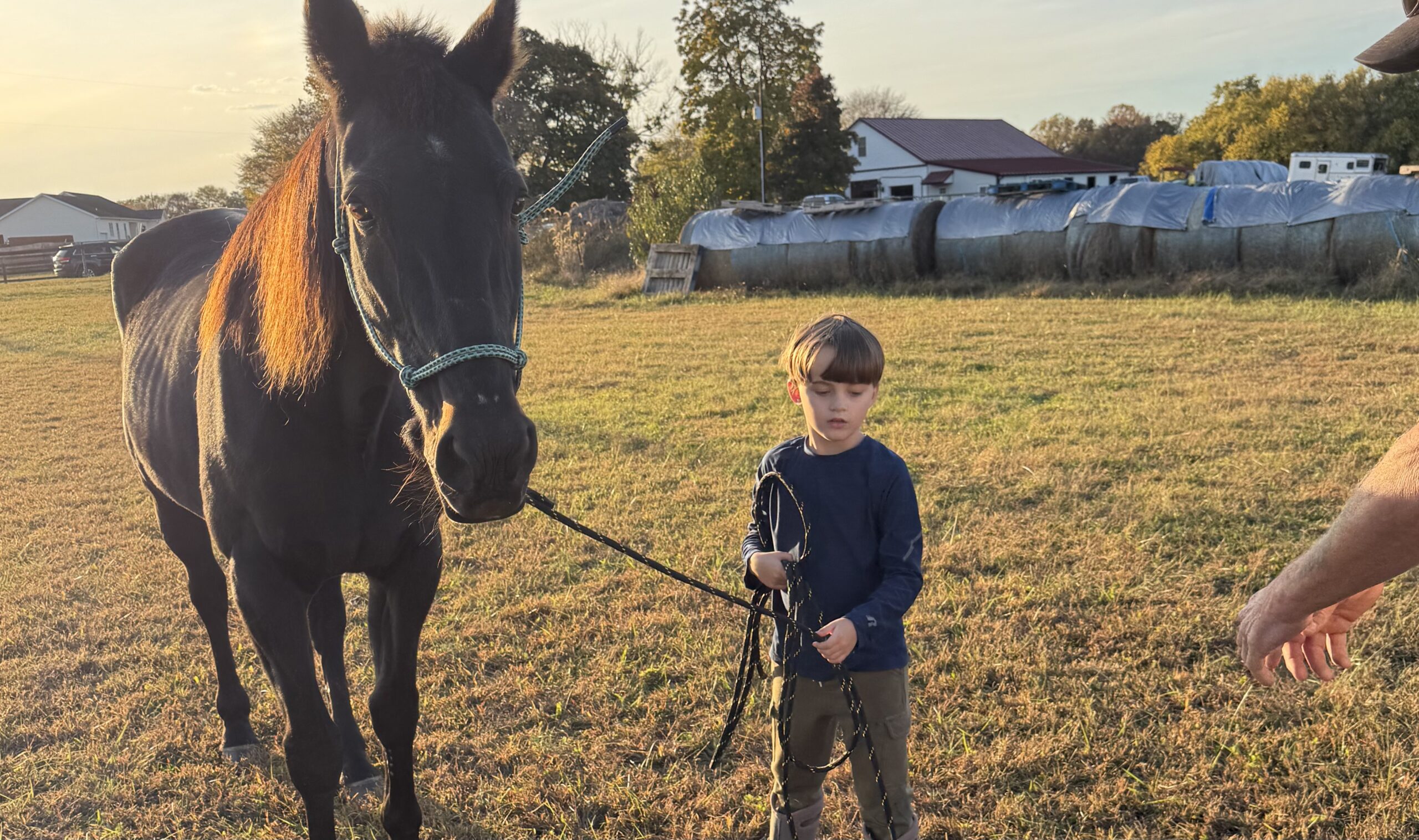
Horses are wired for connection. They constantly read the emotional state of the people around them. When connection feels uncertain, their bodies respond immediately.
A horse that feels disconnected tightens.
Their head comes up.
Their feet stop moving.
Their attention narrows.
And here’s the key: you cannot lead a horse toward learning without first restoring connection.
You can apply pressure. You can demand movement. But progress will always be limited until the horse feels connected enough to follow again.
Experienced handlers learn to watch for this. They don’t ask, How do I make this horse move?
They ask, How do I help this horse reconnect?
Once connection is restored—through calm presence, clarity, and steadiness—movement often follows naturally.
Kids, and adults, work much the same way.
Curiosity Restores Connection
This is why curiosity matters so much.
Control asks, How do I make this stop?
Curiosity asks, What’s happening here—and how do I stay connected in this moment?
Curiosity doesn’t remove boundaries. It strengthens them by rooting them in relationship. It slows the moment down. It helps us stay present rather than reactive.
Curiosity allows us to lead in a way that protects connection—even while addressing behavior.
And connection is where learning happens.
Where the Gospel Deepens the Insight
This understanding of behavior and connection is deeply shaped by our faith.
Jesus consistently led with connection. He noticed people before correcting them. He asked questions. He stayed present with those others avoided. He restored relationship before calling change.
Jesus never reduced people to their behavior.
And He never treated connection as optional.
We believe healing is always a gift from God. The ranch, the horses, the mentors—none of these are the source of transformation. They are simply places where we’ve learned to slow down, pay attention, and cooperate with what God is already doing.
God is the one who restores hearts. Our role is to remain connected enough—and steady enough—for His grace to be received.
A Better First Question
Behavior still matters. Boundaries still matter. Correction still matters.
But what if our first question changed?
Instead of asking, How do I stop this?
What if we asked:
- What is this behavior trying to tell me?
- Where has connection been strained or lost?
- What does this person need right now to re-engage?
- How can I cooperate with what God is already doing here?
When we treat behavior as a signal rather than the problem, we begin leading toward connection instead of control.
And connection changes everything.
A Gentle Close
At the ranch, we’re reminded daily that neither horses nor people are problems to be fixed. They are lives God is already at work in—lives longing for connection, clarity, and care.
Our calling—whether as parents, mentors, leaders, or neighbors—is to pay attention, stay steady, and trust that God is faithful to restore what feels broken.
If these reflections are helpful, you’re welcome to explore more stories and lessons from the ranch as we walk with kids and families together.