How to Raise Resilient Kids Through Connection and Steady Leadership
What Resilience Really Looks Like
Over the years, we’ve rescued several Standardbred horses. Standardbreds are bred for racing, and when their racing careers end, many are sold to Amish farms. That was the path ours took. They spent years pulling buggies, wagons, and equipment—working around people, machinery, traffic, and noise.
That kind of exposure shapes a horse.
Now, when a tractor passes, they notice—but they don’t bolt. When a tarp snaps in the wind, they lift their heads—but they don’t unravel. If a rope brushes their leg, they pause, adjust, and settle again.
They aren’t numb. They aren’t hardened.
They’re resilient.
When parents say they want to raise strong kids, this is usually what they mean. They want children who can handle pressure, disappointment, and challenge without falling apart. In other words, they want to raise resilient kids.
But resilience is not the same as toughness.
The Difference Between Resilience and Shutdown
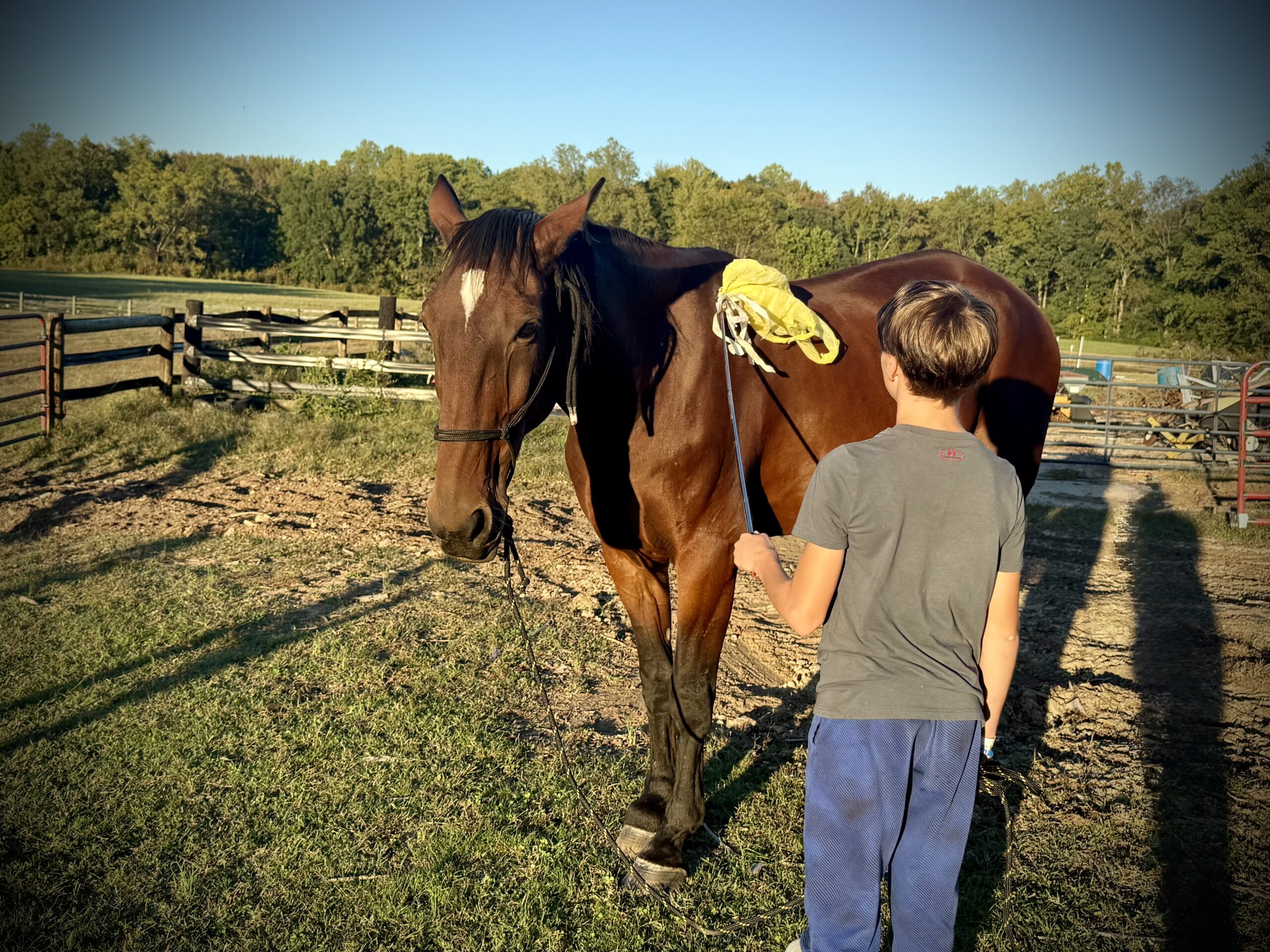
With our program horses, we star with helping them build resilience. We carefully desensitize them so they are safe for volunteers and kids. We introduce tarps, ropes, noise, movement, baloons, even pool noodles—gradually and always with steady leadership and connection.
The goal isn’t to eliminate reaction. It’s to teach regulation.
We want a horse to feel something unfamiliar and still remain engaged with us. True resilience is the ability to process a stimulus and return to calm.
There was once a horse that came into rescue in terrible condition. He didn’t spook. He didn’t react. He barely responded to anything at all. At first glance, someone might have called him calm.
But he wasn’t really calm—he was shutdown.
His eyes were dull. His body withdrawn. The absence of reaction wasn’t strength; it was survival.
That distinction matters deeply when we think about how to raise resilient kids. A well-trained horse remains connected when challenged. A shutdown horse disconnects entirely. One is steady. The other has simply stopped responding.
And sometimes, in parenting, we mistake shutdown for strength.
Why Toughness Is Not the Goal
When we talk about raising strong kids, we sometimes drift toward encouraging toughness.
We minimize feelings.
We say, “You’re fine.”
We push them to move on quickly.
But emotional suppression is not resilience.
A child who stops expressing disappointment may not be strong. They may have learned it isn’t safe to show it. A child who appears unaffected may not be mature; they may simply be withdrawing.
Resilience allows a child to feel disappointment and recover. To experience fear and stay connected. To stumble and try again.
If we want to raise resilient kids, we must understand that resilience grows through connection—not through pressure.
How to Raise Resilient Kids Through Connection
Resilience develops in the context of steady leadership.
At the ranch, we don’t desensitize horses by overwhelming them. We introduce manageable challenge and remain calm while they process it. Over time, their confidence grows because they learn two things:
Discomfort does not mean danger.
Leadership can be trusted.
The same is true in parenting.
Children build resilience when they experience challenge alongside safe attachment. When they know they are not alone. When adults remain grounded during big emotions. When setbacks are met with steady presence instead of panic.
Building resilience in children is not about removing hardship. It’s about helping them navigate hardship without losing connection.
That’s how we raise strong kids without hardening their hearts.
The Role of Steady Leadership in Parenting
Steady leadership in parenting means we regulate ourselves first.
It means we don’t escalate when they struggle.
We don’t withdraw when they falter.
We don’t rush their recovery.
Instead, we model calm and consistency.
Children learn resilience by watching how we handle pressure. They borrow our steadiness before they develop their own.
You cannot give what you do not have.
If we want resilient kids, we must cultivate resilience in ourselves.
Where Faith Anchors Real Resilience
Scripture never confuses strength with emotional detachment.
Jesus wept.
He felt sorrow.
He experienced anguish.
Yet He did not withdraw from His calling.
His resilience was rooted in identity and relationship with the Father.
James writes that perseverance forms maturity. Paul reminds us that strength is perfected in weakness. Biblical resilience is not hardness—it is anchored trust.
When children see faith lived out steadily—when they watch adults remain grounded in Christ through difficulty—they learn that resilience begins with identity.
That kind of strength lasts.
Raising Strong Kids the Right Way
When we say we want strong kids, what we truly desire are sons and daughters who can:
Feel deeply without being overwhelmed.
Fail without collapsing.
Face difficulty without losing who they are.
That kind of strength is not produced by pressure.
It grows through connection, steady leadership, and faith.
At the ranch, the difference between resilience and shutdown is visible in a horse’s posture and eyes. In parenting, it is visible in a child’s willingness to stay engaged even when life is hard.
We are not trying to harden hearts.
We are learning how to raise resilient kids—strong enough to endure, steady enough to trust, and rooted enough to remain connected.
Continue the Conversation
If this reflection resonates with you, you may also want to read:
- The Steadiness Our Kids Need Starts With Us
- Building Trust With Your Child
- What Behavior Is Trying to Tell Us
Each builds on the same conviction: real resilience is not toughness. It is trust that endures.