We live in a world that’s constantly telling parents to add one more thing.
- One more activity.
- One more program.
- One more opportunity we’re afraid our kids might miss.
Most families I know aren’t lazy or disengaged. They’re exhausted. Their calendars are full, their cars are always moving, and their kids are rarely still. Yet in the middle of all that motion, many parents quietly wonder why their kids still seem anxious, reactive, or disconnected.
Here’s something I didn’t fully understand until years later.
When my kids were younger, there were seasons when I’d drop my son off at practice and rush off to run errands. There was always something else that needed to get done. Other seasons, I was the coach—fully involved, responsible, and focused on everyone. And then there were a few seasons when I could simply stay, sit on the sidelines, and watch him practice.
At the time, I didn’t think much about the difference.
Looking back now, it’s very clear.
Of all those seasons, the times my son seemed to get the most joy out of the experience weren’t when I was busiest or even most involved. It was when I was simply there—for him. Not fixing anything. Not directing anyone else. Just present.
That experience taught me something I’ve since seen repeated over and over again with kids and families:
Most kids don’t need more to do. They need more someone.
Kids grow best in the presence of adults who are consistent, calm, and genuinely available. Not perfect. Not flashy. Just present. The kind of presence that shows up again next week, and the week after that, even when progress is slow.
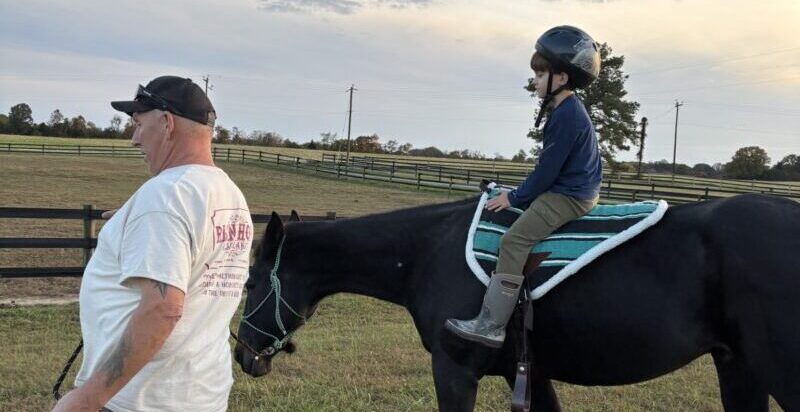
At the ranch, we see this clearly through our work with horses. Horses don’t respond well to chaos or pressure. You can’t rush them into trust, and you can’t force cooperation without consequences. They’re incredibly sensitive to what’s happening inside the person leading them. If an adult shows up hurried, frustrated, or distracted, the horse knows immediately.
Kids aren’t all that different.
Children test before they trust. They push boundaries not because they’re defiant, but because they’re asking an important question: Are you still here if I make this hard? Trust isn’t built through intensity—it’s built through consistency.
One of the quiet mistakes we make as adults is believing that growth happens through constant activity. In reality, growth happens through relationship. Skills matter. Structure matters. But neither works without connection first.
This is why adding another program rarely fixes what’s really going on. Programs can support growth, but they can’t replace presence. Kids don’t remember everything we sign them up for. They remember who stayed.
Kids remember who stayed.
Discipleship works the same way. Jesus didn’t rush people through transformation. He walked with them. He ate with them. He stayed when things got messy. Formation takes time because trust takes time.
For many kids today, the greatest gift an adult can offer isn’t another opportunity—it’s steadiness. A place where expectations are clear, boundaries are firm, and grace is real. A place where they are known before they are corrected.
That kind of environment doesn’t happen accidentally. It’s built slowly, intentionally, and relationally.
That’s the work we care about—whether it’s with kids, families, or even the horses themselves.
If these reflections resonate with you, you’re welcome to follow along as we continue sharing what we’re learning while walking with kids and families, one step at a time.