
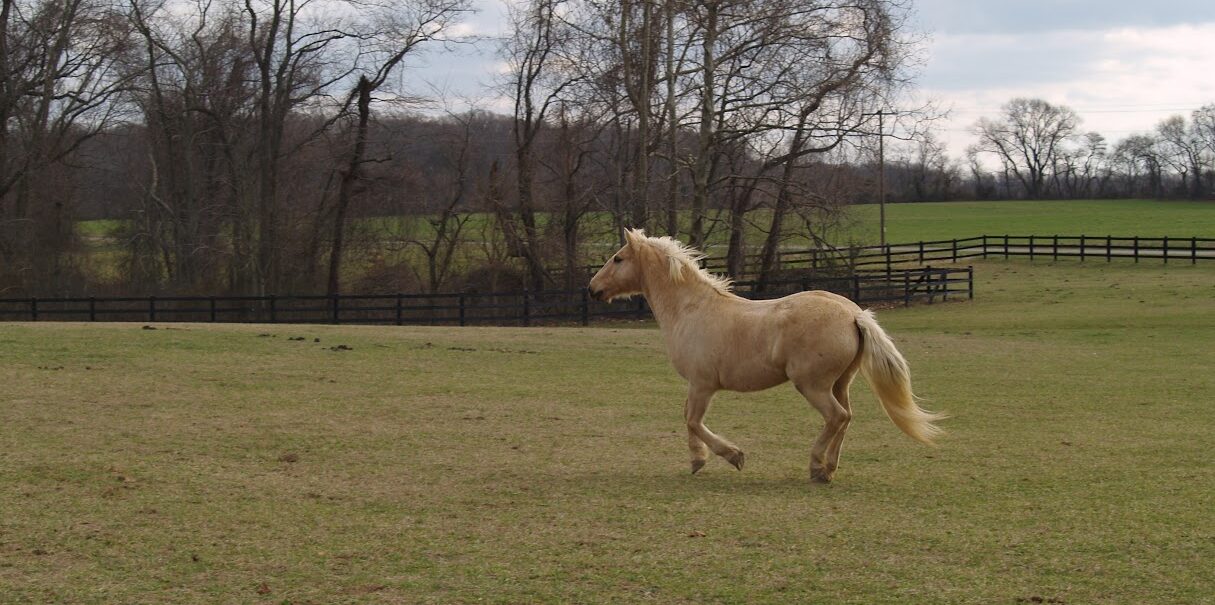
Reno was one of the most well-trained horses we’ve ever had at the ranch.
He was a mustang. Responsive. Athletic. Capable.
He knew his job.
There was just one small problem.
He hated to be caught.
Reno would much rather stay in the pasture with his friend Dixie than come work with us. But on most days, with a little patience, we could eventually get him.
But this particular day, I was in a rush.
I needed to move him into another paddock. I had other things to do. The clock was ticking.
And Reno decided he wasn’t interested in helping out.
I tried everything.
Food.
Treats.
Fresh hay.
Every time I got close, he ran off.
Now, if I’m honest, the frustration wasn’t really about Reno. It was about my schedule. My urgency. My sense that things needed to move faster than they were.
So I made a decision.
I’d teach him a lesson.
I got on the four-wheeler and decided I’d follow him around the pasture until he got tired of moving.
We went in circles for an hour.
And you know what?
He never let me catch him that day.
When Hurry Turns Into Force
Looking back, Reno didn’t need a lesson.
I did.
He wasn’t being disobedient. He was being a horse. And he was responding to the energy I brought into the pasture.
I was rushed.
I was frustrated.
I was escalating.
And he mirrored it.
Horses are remarkably sensitive to what we bring into the space. If we’re tense, they tighten. If we’re impatient, they move away. If we escalate, they do too.
The chaos in us creates chaos around us.
Kids aren’t all that different.
What Escalation Really Teaches
As parents, we all have moments when we’re in a hurry.
We need cooperation.
We need movement.
We need the situation to resolve quickly.
When that doesn’t happen, escalation feels necessary.
We raise our voice.
We increase consequences.
We apply more pressure.
Sometimes we tell ourselves we’re “teaching a lesson.”
But what are we really teaching?
Often, we’re teaching that frustration leads the moment. That urgency outranks connection. That control is the goal.
And just like Reno, our kids can begin running—not always physically, but emotionally.
Withdrawal.
Shutting down.
Defensiveness.
Escalation rarely produces steadiness. It usually multiplies instability.
The Mirror We Don’t Always Want
Here’s the harder truth.
If we want steadiness in our kids, we have to cultivate steadiness in ourselves.
We can’t give what we don’t have.
We want:
- calm responses
- regulated emotions
- thoughtful decisions
But those qualities don’t appear in our children if they don’t see them modeled first.
Reno wasn’t refusing because he was untrained. He was reacting to what I brought into the field.
Sometimes our children are doing the same.
Not because they’re bad.
Not because they’re hopeless.
But because they’re responding to the emotional weather around them.
Where Faith Grounds This
This is where our faith matters deeply.
Jesus was steady.
Crowds pressed in.
Opposition mounted.
Disciples misunderstood Him.
And yet He remained grounded.
Not because circumstances were calm—but because He was rooted in the Father.
His steadiness wasn’t manufactured. It was received.
He withdrew to pray.
He rested.
He abided.
If we’re honest, most of us don’t lose our steadiness because our kids are too difficult.
We lose it because we’re already exhausted. Already anxious. Already carrying more than we’ve surrendered to God.
We try to lead from empty places.
And empty places escalate quickly.
The Work God Is Doing in Us
The longer I’ve been at this—both at the ranch and in parenting—the more I realize something humbling.
God isn’t just forming our kids.
He’s forming us.
The moments that frustrate us most often expose where we are still impatient, still hurried, still striving for control.
And that’s not condemnation.
That’s invitation.
An invitation to slow down.
To breathe.
To remember that transformation belongs to God.
We guide.
We correct.
We stay steady.
But He is the one who changes hearts—ours included.
The Long Game of Steadiness
I never did catch Reno that day.
Eventually, when I slowed down on another day—when I wasn’t rushed, when I approached differently—he came.
Not because he was forced.
Because the moment was different.
Parenting is much the same.
The steadiness our kids need doesn’t begin with their behavior.
It begins with ours.
Formation is slower than fixing.
Steadiness is quieter than force.
And the work God does in us often becomes the greatest gift we offer our children.
At the ranch, we’re constantly reminded that leadership starts with who we are before it moves into what we demand.
And that’s true in every pasture—and every home.
If these reflections are helpful, you’re welcome to explore more stories and lessons from the ranch as we walk with kids and families together.
If this reflection resonates with you, you may also want to explore some of the earlier lessons that led us here:
- Kids Don’t Need More to Do — on presence over performance
- Why Pulling Harder Rarely Works with Horses or Kids — on trust and cooperation
- Before Kids Can Grow, They Have to Feel Steady — on the role of calm leadership
- What Behavior Is Trying to Tell Us — on connection beneath conflict
- Building Trust With Your Child — on formation over compliance
Each of these reflections builds on the same conviction:
Leadership begins with who we are, not what we demand.
And the steadiness our children need is something God continues to form in us first.

Leave a Reply